İrem Kalender
How To Create A Brand
True branding isn't superficial marketing it is an intentional act of strategic identification. Exploring the psychology of consumption, craftsmanship, and social alignment, building a cohesive brand identity that speaks directly to an audience's true values, desires, and lifestyle.
BUSINESSMARKETING
İrem Kalender
7/28/20266 min read
When we interact with a brand, a person, or an object, the sensation of instant connection is not an accident. It is the actual magic of branding.
When you perceive absolute coherence a unwavering consistency across every detail, touchpoint, and nuance you are not looking at a mere marketing strategy. You are witnessing the strategic identification of oneself.
It is one of the oldest truths in human behavior: people do not buy tools or raw materials solely for their utility. They buy identity.
People deeply desire to be understood. They seek a lifestyle, a legacy, or a visual language that represents who they truly are or who they aspire to become. They buy into an ideology. They seek quality and respect, looking for delicate, unforced craftsmanship where every detail feels intentional rather than overdone. They choose a brand because the input they invest yields a valuable output: a reflection of their goals, their lifestyle, and their true colors.
Building a brand with that level of gravity requires an intentional architecture. Here is how that identity is crafted, step by step.
Step 1: Identify Your Vision
Before you can be perceived, you must be defined. A brand must hold a vision uniquely tailored to its core. This vision is not a abstract mission statement; it is composed of five concrete pillars:
Your Business Architecture: Define your baseline scale and positioning. Are you building an accessible model designed for high-volume reach, or an high-end model driven by intentional scarcity?
Your Motto & Market Urge: What is the underlying friction or impulse driving you into this market? What void are you compelled to fill?
Your Story & Legitimacy: What is your origin? Why should an audience invest their attention in you? Your story must prove qualification and convey what your products communicate on a deeper level.
Your Design Frequency: Every deliverable whether a blouse, a performance vehicle, or a specialized service transmits a distinct frequency through its lines, behaviors, and tones. Not every design is for everyone. What is your aesthetic, what does it signal identify it and live with it.
Your Absolute Delivery: How does the story move from the back room to the front table? Every channel, interaction, and delivery mechanism represents who you truly are even you realize or not. People you surround yourself with even your retail team ( they are quite important even though digitalis is drastic they are still the people who your customer sees and experience value them and pick them perfectly) has huge significant effects on your tone. Every part of delivery must align perfectly with your core vision.
Step 2: Identify Your Customer (Without Compromising Your Backbone)
A common mistake in brand building is starting with the customer and working backward to sculpt the brand around them. But a brand cannot force its identity into foreign molds. Imagine Hermès attempting to operate with the messaging of a discount fast-fashion retailer—the dissonance destroys the soul of the house.
Forcing your brand to become something it is not creates immediate friction. Without an internal compass, a brand becomes a sail caught in changing winds: temporarily profitable, perhaps, but structurally unsustainable.
While every individual is unique, people exist within social orbits clusters of shared tastes, values, and aesthetic preferences. You do not need to alter your identity to capture an audience; you need to locate the orbit that already shares your vision.
Map Tastes and Intersecting Interests: People who align with your vision share complementary hobbies, media habits, and cultural touchpoints. (Consider the alignment in the collaboration between Bentley and the Gstaad Guy it speaks directly to a shared cultural universe rather than a broad demographic).
Leverage Analytics with Rigor: Ground your intuition in data. Analytics, market statistics, and behavioral metrics are your most tangible tools to understand where your audience gathers and how they move.
Personify the Entity: Treat your brand as a living person. Where would they spend their time? What events would they host? What would they read? Invest directly in those specific environments.
Step 3: Architect the Ecosystem & Signature Nuances
Once your vision is set and your orbit is identified, your brand identity must be translated into an immersive ecosystem. Identity is not declared through slogans; it is experienced through cohesion.
Develop Signature Touchpoints: True distinction live in subtle, repeated details a specific stitch, an unmistakable weight of paper, a distinct tone of voice, or a unique customer onboarding ritual. These signatures act as silent handshakes between the brand and those who understand it.
Ensure Vertical Cohesion: Every element of your output must feel as though it originated from the exact same mind. If your digital presence promises restraint and elegance, but your physical packaging or client communications feel rushed or loud, the illusion shatters instantly. Your customers will feel the uncorfableness of inconsistency
Design for Intention: Respect your audience's intellect. Do not overexplain or overdesign. Allow the craftsmanship and the subtlety of the work to invite the customer in, creating a sense of quiet confidence. Don’t overstate or overdo trust your product your service and force yourself to do the best possible.
Step 4: Cultivate Perception Through Strategic Presence
How a brand chooses not to show up is just as important as where it appears; true strategic presence requires disciplined boundary setting. An enduring brand understands its core capabilities, as well as its audience's true expectations it never tries to be everything to everyone. If your strength lies in tailored clothing, master clothing. As you build a lifestyle around your core output, avoid forcing unnatural category expansions, like a rushed café line or dilute accessories. Expansion must be so seamlessly designed that it feels quietly discovered by those who truly know, rather than loudly broadcast to the masses.
Ultimately, your own marketing is only half the narrative the far more powerful half is your brand's resonance in unowned spaces. What is the immediate impression when your name is spoken in a room? Is it perceived value, delicate craftsmanship, or legacy? You must strictly audit the environments, platforms, and associations surrounding your brand, curating them with calculated, strategic discipline.
Protect Your Distribution Channels: Control where and how your identity is accessed. Ubiquity dilutes distinction. Select partnerships, platforms, and physical spaces that elevate your baseline positioning rather than compromise it.
Master the Art of Strategic Restraint: Avoid chasing every trend or responding to every market pivot. Brands that endure maintain an unwavering core while allowing minor, thoughtful evolutions at the surface.
Build Community Through Curation: Your early adopters are not merely buyers; they are co-authors of your public perception. Curate your ecosystem so that belonging to it feels like an assertion of taste for the customer.
Step 5: Execute Continuous Refinement & Legacy Creation
The final stage of strategic identification is the transition from a compelling brand to an enduring legacy. This requires managing the tension between consistency and evolution.
Protect the Uncompromisables: Identify the core principles of your craftsmanship, philosophy, and visual identity that can never be modified for short-term gain.
Evolve the Expression, Preserve the Essence: As culture moves, update your mediums, technologies, and formats—but keep the underlying frequency intact.
Measure Output by Identity Capital: True brand equity is measured not only by immediate revenue, but by identity capital: the degree of trust, respect, and emotional connection your audience attaches to your name.
"Branding is an act of clarity both within yourself and with your customer. When you build with precision, respect for craftsmanship, and an unshakeable understanding of who you are, you cease competing on features or price. You become a beacon for those seeking to express their own true colors delivering a valuable output that honours both their goals and their identity. Becoming the actual brand."






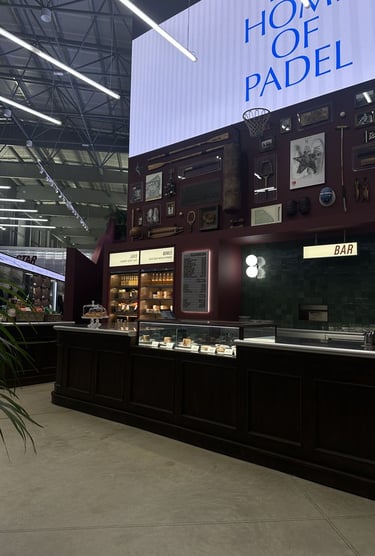



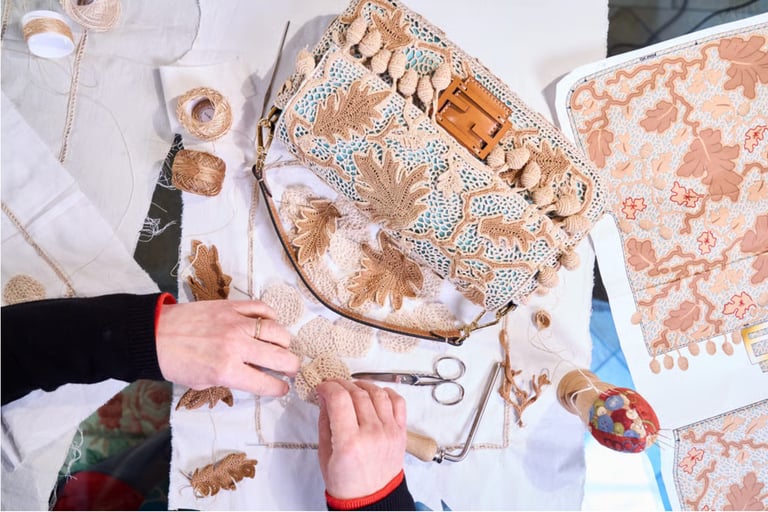


(5)
(6)
(3)
(4)
(2)
(1)
Images
Black line: https://tr.pinterest.com/pin/33003009763433096/
İmage1: https://www.instagram.com/p/DSK7ogQDZw5/
image2:https://www.instagram.com/p/DYUujWfDBQq/
İmage3: https://ww.fashionnetwork.com/news/Lvmh-launches-a-prize-to-promote-italian-craftsmen,1486903.html
İmage 4: https://www.insidelvmh.com/auth

Contact
Feel free to reach out for collaborations or questions.
irem.kalender@ug.bilkent.edu.tr
© 2026. All rights reserved.
www.linkedin.com/in/iremkalender7